
If a person wishes to be sure of the road they tread on, they must close their eyes and walk in the dark.
—John of the Cross
Let me begin by telling you what this is not: This is not the story of how I terminated the contract that identifies me as the child of genetic strangers. My official birth certificate still lists my adopters as if they gave me birth. In the eyes of the state, I remain bound to a legal fiction to which I never gave consent, born not of a woman but by judicial decree.
Rather, this is the story of a series of events that flipped the script of my adoptive identity and oriented me toward greater wholeness, truth, and agency. This is the well to which I return whenever I need to recalibrate my inner compass. Therefore, I approach this retelling prayerfully, open to new insights and perspectives.
I reach the sign I passed the evening before, “New Camaldoli Hermitage,” south of Big Sur, California, on the Pacific Coast Highway. From around the corner where the driveway disappears into the surrounding foliage, a woman jogs toward me. She takes one look at my bike, heavily laden with panniers and camping gear, and exclaims, “You’re not going to ride that up to the monastery, are you!?” “Why not?” I ask. “Because it’s another two miles of steep switchbacks!” Flustered but undeterred, I reply, “Well, then I guess I’ll walk.” I lock my bicycle to a signpost hidden from view of the road and set out on foot.
Seven days earlier, I left behind my last point of orientation on either a map or a calendar.
When I planned for this bicycle tour, I had no set route, destination, or timeline. But I did sign up to volunteer to help with a public event at Spirit Rock Meditation Center in Marin County, California, just north of San Francisco—the date, October 19, 2001. I packed my bike in a box and flew from LaGuardia Airport in New York City to Ontario in Southern California, where I reassembled my bike on the sidewalk and rode into the desert. I met up with a friend in Palm Springs and we bounced from Joshua Tree National Monument to Tucson to Sedona, Arizona, where we parted ways. And still, I was so intent upon fulfilling my modest responsibility at Spirit Rock that, through a whirlwind combination of hitchhiking, a Greyhound bus, and bicycling, I managed to cover over 800 miles from Sedona in just a few days.
In contrast to my dogged determination, when I arrived at Spirit Rock, no one seemed to have expected me. Even so, someone handed me a broom and I got to work. I stayed on for several periods of meditation, dinner, and a Dharma talk before disappearing into the night and setting up camp off a nearby trailhead.
After a fitful sleep through a torrential downpour, I awoke to a pristinely quiet, glistening green world. In fact, I was so enthralled by the redwood forest—my first taste of these magnificent trees—that I was eager to keep travelling north to see the real giants. But the previous night’s deluge gave me pause. This was just the beginning of the rainy season, and the rains would only get worse the further north I went. On the spot, as I sipped my morning Earl Grey tea, I decided to bike south instead.
As I absorbed the familiar vibrations of tires rolling on asphalt over the next few days, I began to feel the weight of having nowhere to go and no home to return to. This utter lack of reference points struck me as simultaneously liberating and oppressive. I went from exploring the geographical deserts of the Southwest into an interior desert of untethered aimlessness. And yet, it was into this very aimlessness of spirit that something mysterious emerged, an intuitive nudge that was all the more conspicuous for its specificity: go to a Catholic monastery. What? Why? Never mind, the intuition persisted, just go. I didn’t hear words, mind you, I just knew, even if this knowledge seemed to contradict my reasoning and desires.
I didn’t actively look for a monastery. If anything, I tried to hold this intuition at bay, to not think about it while I just keep biking. Nevertheless, as I snaked along the coastal highway one evening looking for a place to camp, to my surprise, there it was—New Camaldoli Hermitage, a Catholic monastery. I pitched my tent by the ocean a short distance away. The next morning, despite a strong urge to keep moving, I turned around and headed back to the monastery. At the least, I needed to see what, if anything, this intuition was prodding me toward.
I arrive on foot at last to the monastery bookstore, a glorious 1300 feet above the Pacific Ocean. I greet the monk at the desk and peruse the books on display. Not knowing what else to do, I leave. “I showed up and nothing happened. Now I can get back on the road,” I think to myself. I stop abruptly in the parking lot, however. I want to buy a book by Thomas Merton that I had thumbed through. When I enter the bookstore the second time, I meet a maintenance worker, who introduces me to his supervisor, who offers me a job.
Even though I have less than 300 dollars in my bank account at this point, with no other prospects on the horizon to earn more, I am unsure about taking a position on the monastery maintenance crew. “If you decide you want the job, just meet me here at three,” the supervisor tells me.
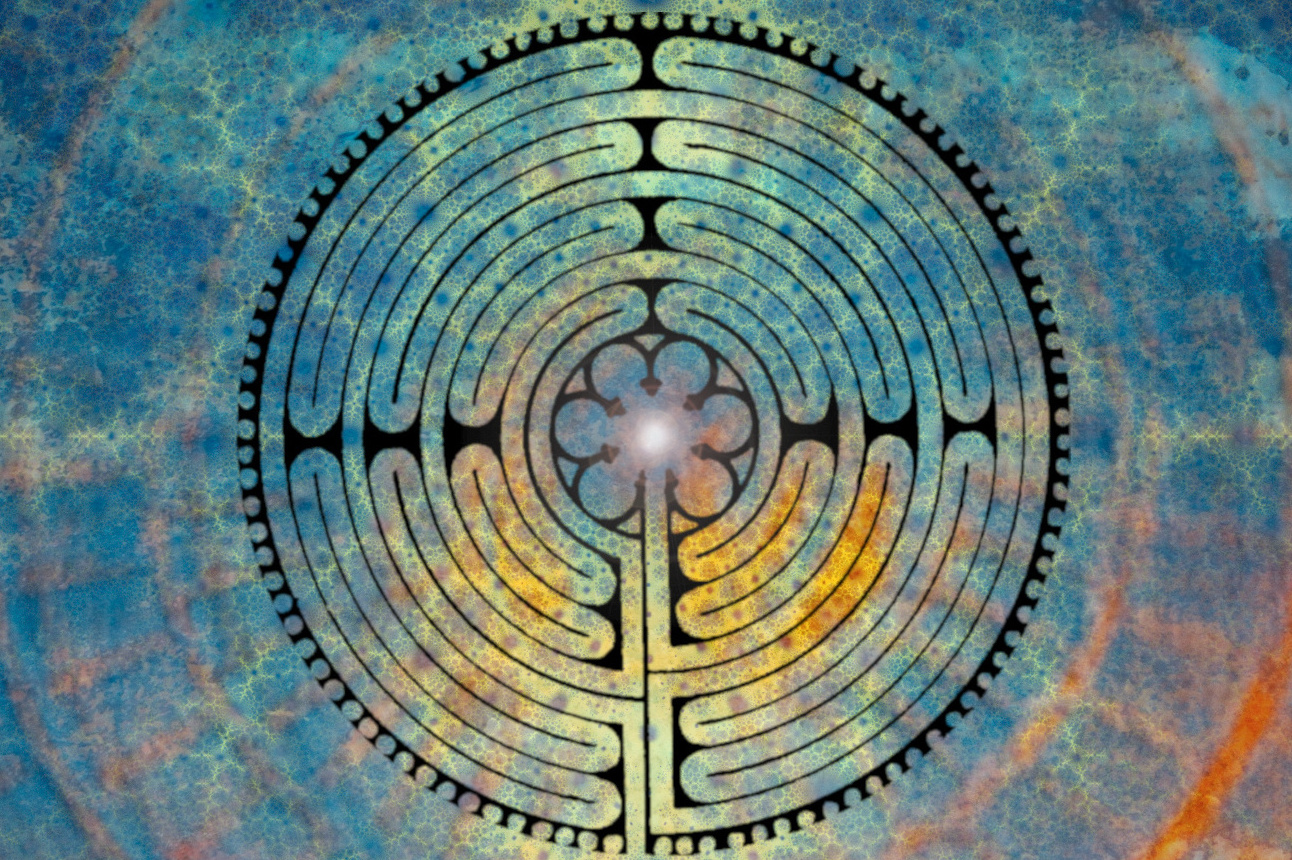
In the meantime, I attend Mass with the monks. The routine is still familiar from my nominal Catholic upbringing, but I am unmoved. More than unmoved, really, I feel mildly repulsed. I am accustomed to monasteries—I lived in a Buddhist monastery only a few years prior. But the Catholic faith of my childhood still strikes me as an impenetrable labyrinth of ritual, belief, and symbol, grounded in an archaic worldview, whatever wisdom might lie at its heart.
I decide to bolt. I run back down the hill to my bicycle, ride sixty miles to the town of San Simeon, and sleep on the beach.
The next morning, I wake up in my tent utterly depressed. All I can think of is to keep moving, moving, moving, but I don’t know why. What felt liberating about having no points of orientation on a map or a calendar has now curdled and revealed itself as something approaching despair. Apathetically, I pick up the book by Thomas Merton that I purchased at the monastery and begin to read. Again, unmistakably, the intuition returns, stronger than before: go to the monastery! I ride to the nearby town of Cambria, call the maintenance supervisor on a pay phone, and ask if I can still have the job. “Sure, see you on Monday.”
That night, camping in the same place where earlier I awoke in a bitter depression, a profound shift has taken place within me. I feel elated, pervaded by a joy and lightness of heart seemingly without cause. I dance amidst moonlight and shadows beneath the cypress trees.
The next morning, I begin the ride back to the monastery. No longer merely an obscure intuition from an inscrutable source now, but joy leads the way. I said ‘yes’ to something alluring me from depths I cannot fathom, to an invitation that feels intimate while respecting my freedom to choose. And from a desert of aimless wandering, without roots, orientation, or a sense of home, joy itself has become my true north.


Leave a Reply