
Note: This post is the sixth in a series. To read it in context, start here.
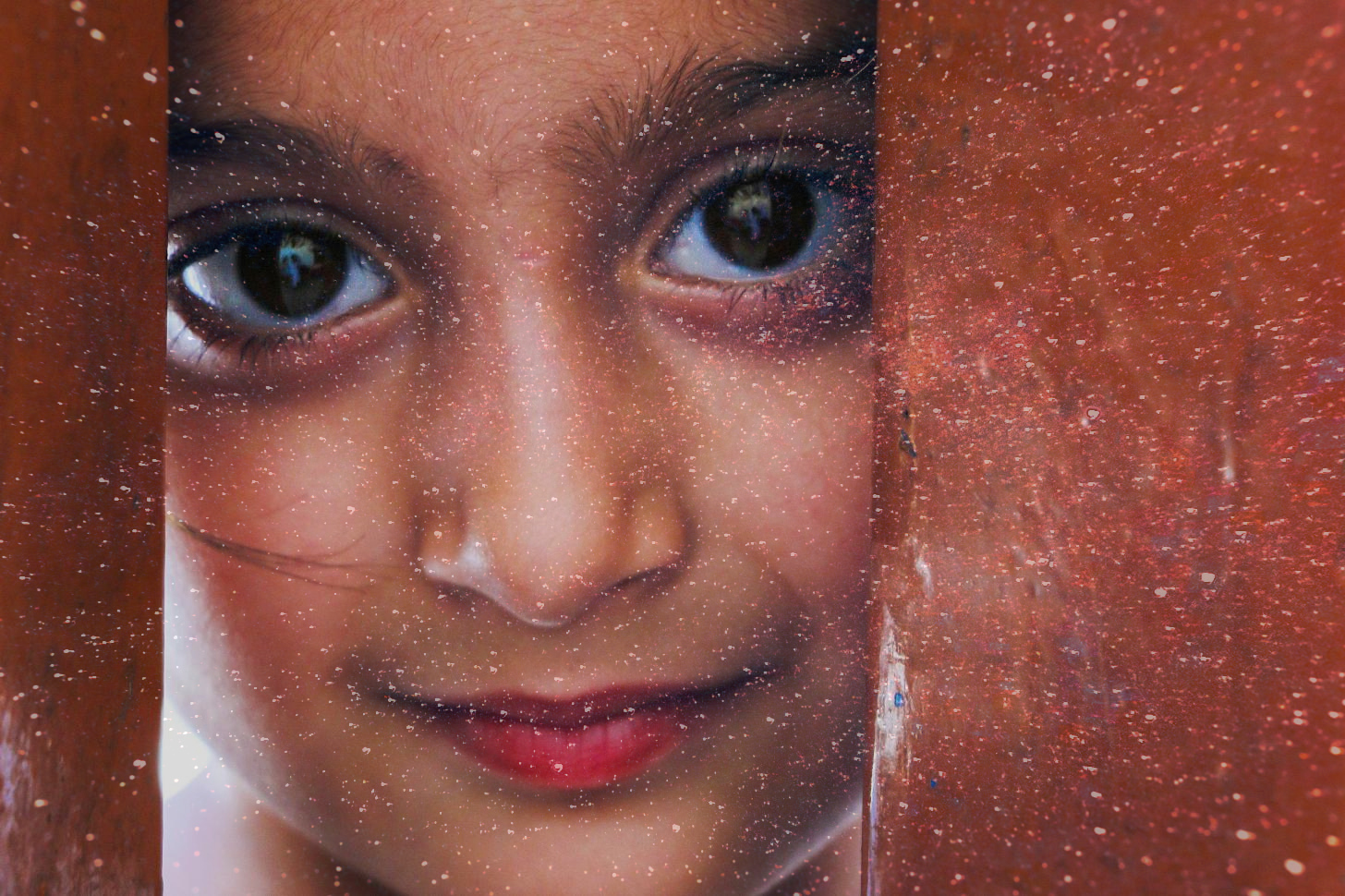
Childhood is openness. Human childhood is infinite openness. The mature childhood of the adult is the attitude in which we bravely and trustfully maintain an infinite openness in all circumstances and despite the experiences of life which seem to invite us to close ourselves.
—Karl Rahner
Truly I tell you, unless you change and become like children, you will never enter the kingdom of heaven.
—Jesus of Nazareth
In reflecting on the first time I read Julian of Norwich’s Revelations of Divine Love, I revisited an essay by the 20th century theologian Karl Rahner entitled “Ideas for a Theology of Childhood.” Rahner’s main point is that we live out of an apparent dualism from birth. On the one hand, we are shaped not only by our immediate history but by countless generations that have come before us and indeed by the whole world and the history of the cosmos. In our historically-conditioned identity, suffering, conflict, and incompleteness are inescapable. There is no pristine beginning, no wholeness to be found in our broken world. On the other hand, we are always and everywhere cradled in an absolute, unmediated intimacy with God—the mysterious ground of our existence who is closer to us than we are to ourselves. Both are true. And yet, each view offers a radically different vision of life and, particularly, of childhood.
Toward which vision of childhood are we primarily oriented? Are we growing into our full potential as children of our divine source or do we remain tethered to the past, our eyes glued to the rearview mirror?
As a twice-adopted person, I expend a great deal of emotional energy thinking about my childhood. I don’t only mean that I spend a lot of time consciously thinking about the past. More deeply, much of my energy seems bound up just below the threshold of conscious thought, anxiously ruminating over conflicting views of identity, belonging, and the world I live in. It’s like constantly picking at a wound in the hope that it will heal. Who am I? With whom do I belong? Where do I stand? I don’t even know how or where or with whom I spent the first fourteen months of my life before I was adopted. The story of my origins after my mother held me for ten minutes the day after I was born is an opaque shadow to me. Compound that with another relinquishment and closed adoption when I was nine years old—another family, home, name, and birth certificate assigned to me—and it’s no wonder that I find no dependable place to land in myself on these most fundamental questions.
Can I confirm with Karl Rahner, then, that there is no evidence of wholeness to be found in my historical identity? Painfully, yes! And yet my chronic anxiety and rumination about the past witness to the fact that my system still desperately seeks an ever-elusive sense of completeness where it cannot be found.
Mind you, I don’t mean to make light of this search or its importance in our lives. In fact, I write having undergone reunion with both sides of my family and years of intensive therapy focused on healing from the impacts of relinquishment and adoption. All of this has been necessary and beneficial. Yet my concern is that this search can easily become an end in itself, when in fact there is no end to it, no point of completion. After so many years of seeking healing and mending or coming to terms with broken relationships, the emptiness, ache, and longing in my heart remains.
Thankfully, however, that’s not the whole story.
According to Rahner, childhood takes on a very different meaning from the point of view of the eternal now in which we also live. Childhood, in this sense, is not something behind us but something ever-present and ahead of us. It is the invitation to surrender ever more deeply into the immediacy of God holds us and sustains us in existence, moment to moment. It is the willingness to stand nakedly before all that we cannot know, with all of our limitations. It is the leap of faith to give ourselves fully and trustingly to life, in spite of the evidence. In this sense, the promise of childhood—of having nothing in ourselves alone yet entrusting ourselves utterly to what is most intimate to us—can only be realized in our greatest human and spiritual maturity.
One of the most striking features of Julian of Norwich’s writing is how eloquently and tenderly she portrays God as our true mother. In this, she is not speaking metaphorically. Rather, she literally means that no one is worthy of the word mother but God. In fact, she claims that whatever we experience of mothering through human beings, including birth, nurture, and nourishment, is actually God acting in and through those very human beings.
What does this mean?
For my part, I know that one of my greatest vulnerabilities is to seek after someone or something to fill the mother-sized hole in my heart. And Julian isn’t promising that God can fill that hole, per se. She recognizes clearly, like Rahner, that life is full of suffering and incompleteness. Rather, as I see it, Julian offers the hope that, no matter the pain and confusion we carry, our true mother, source and ground of our existence, holds us most lovingly and wisely even when this isn’t apparent to us. In fact, it is always a leap of faith, a trusting commitment to the life we are given—not another life but the one that we know within a larger horizon. In naming what is natural to us, therefore, Julian is not giving us a comforting metaphor but affirming the deepest truth of who we are and what is irrevocably available to us:
By nature, the child does not despair of the mother’s love.
By nature, the child does not take responsibility upon itself.
By nature, the child loves the mother and each one of them the other.
This is the mature childhood that Rahner speaks of, the realization of loving faith and enduring hope. It is not dependent on our life circumstances or our historical childhoods being one way or another. It isn’t something attained at the end of a healing process. It is, rather, pure gift—the gift of becoming what we are as our awakening faith melts our habits of fear, effort, and performance.
This is the gift that I intuited when I first read Revelations of Divine Love, even if I could not articulate it at the time. Despite my limited understanding, Julian helped put words to all that I was discovering since I first felt the intuitive nudge that brought me to New Camaldoli Hermitage. As I read, I felt a distinct sense of liberation in my heart. The emptiness that I carry does not need to be filled. I do not need to put the broken pieces of my life together, because another kind of wholeness is already available to me, here and now. In Julian’s poetic phrasing:
For as the body is clad in the clothes,
and the flesh in the skin,
and the bones in the flesh,
and the heart in the breast,
so are we, soul and body, clad in the goodness of God
and enclosed—yea, and even more intimately,
because all of these others may waste and wear away,
but the goodness of God is ever whole,
and nearer without any comparison.
My true mother has never nor cannot ever leave me. Therefore, I am free to be the child that I am.
I gaze out the window of Lucia Lodge, just down the road from the monastery. We are here for lunch with some of the monks. This is an annual tradition, a way for the monks to show appreciation to staff like me who help keep the place running. Father Michael sits beside me at table but I am not paying attention to him at the moment. I arrived back a few days ago from a Zen meditation retreat in the Santa Cruz Mountains and haven’t felt the same since. I sense a new intuition tugging at me but I cannot name what it is. I wonder absentmindedly about this as I contemplate the rolling waves of the Pacific Ocean below.
I feel Michael’s eyes on me as I turn from the window to face him. He looks me up and down intently, in a way that tells me that I am transparent to him. I’ve known him long enough to trust this x-ray vision of his that can sometimes seem to penetrate to the marrow of my soul. He completes his scan, meets my eyes, and tugs on his denim jacket—the type of jacket that all the monks wear when they are out in public. Then he nods confidently to himself, as if he’s just confirmed something in his mind.
“I see you in one of these within two years,” he tells me.
His meaning is clear. He sees me becoming a monk in the near future. But this clarity is not his alone. Like a tuning fork striking the right vibration, his words give shape to my intuition. This is the shift I’ve been struggling to name. I will become a monk, perhaps even sooner than Michael anticipates—my next leap of faith.
Karl Rahner. “Ideas for a Theology of Childhood.” Theological Investigations, translated by David Bourke, vol. 8. Darton, Longman & Todd, 1971, pp. 33–50.
For an accessible modern translation of Julian of Norwich, see Mirabai Starr. Julian of Norwich: The Showings: Uncovering the Face of the Feminine in Revelations of Divine Love. Newburyport: Hampton Roads Publishing Company, 2022.
Leave a Reply